CNC Milled Carbon Fiber RC Car Chassis Plate
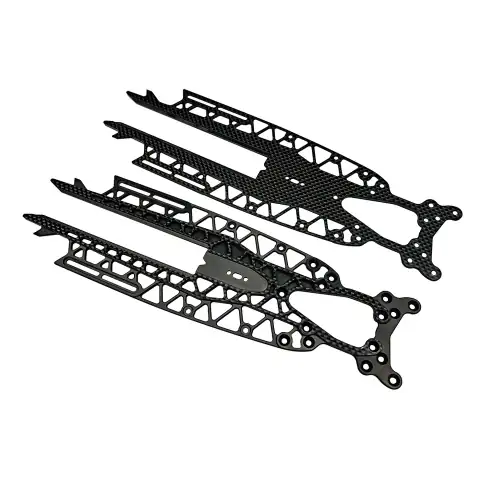
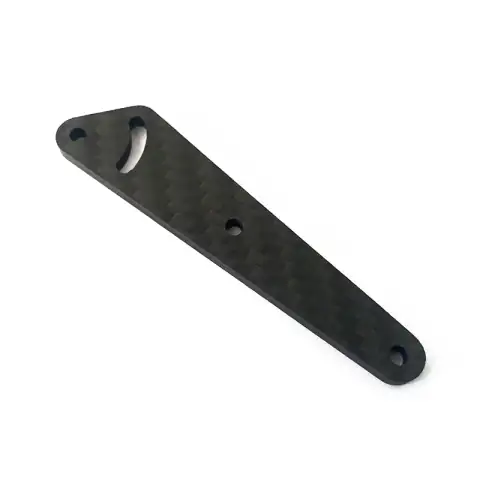
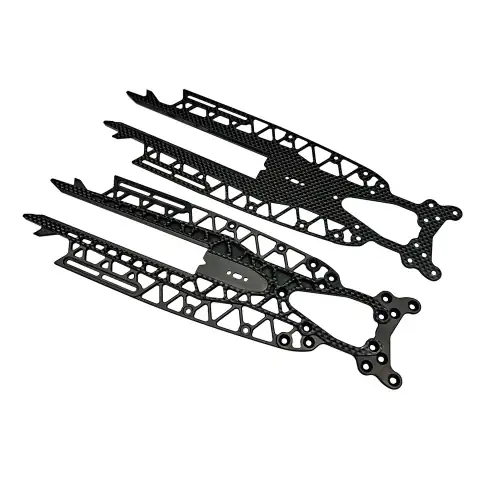
These are CNC milled carbon fiber parts for RC cars: chassis plates, shock towers, top decks and braces cut from 3K twill or plain-weave sheet. Profiles, countersunk holes and slots are machined to ±0.05 mm, with tighter positions on critical holes. They suit RC hobby brands and racing teams that need stiff, light parts in prototype or production quantities.
- Material
- Carbon Fiber
- Tolerance
- to ±0.005 mm
- MOQ
- 1 piece
- Prototype lead time
- 3–7 days
- Compression routing limits edge delamination
- 3K twill or plain-weave, gloss or matte
- Countersinks and chamfers cut in one program
- Every part visually checked for delamination
Item ref. 11000014204767 ·
| Process | CNC milling of carbon fiber sheet |
|---|---|
| Materials | 3K carbon fiber sheet, twill or plain weave |
| Tolerance | ±0.05 mm typical on profiles and holes |
| Surface Finish | Gloss or matte face; chamfered or sealed edges |
| MOQ | 1 piece |
| Drawing Formats | STEP, IGES, X_T, STL, DWG, DXF, PDF |
| Lead Time | Samples typically within 7 working days; production 10–20 working days |
| Inspection | Profile and hole check against DXF; 100% visual edge inspection |
| Sheet Thickness | Common range about 1.5–5 mm |
Manufacturing
How we make this part
Process, material options and inspection for cnc milled carbon fiber rc car chassis plate.
Carbon fiber sheet is clamped on a vacuum or sacrificial fixture and cut with diamond-coated or compression routers that shear fibers at both faces to limit delamination. Spindle speed and feed are tuned to the sheet thickness so heat does not soften the resin. Countersinks for flat-head screws are cut in the same program, and edges are chamfered or rounded to prevent splintering in crashes.
3K twill sheet is the usual choice for visible parts thanks to its look and even stiffness; plain weave is slightly stiffer in-plane. Thickness from roughly 1.5 mm to 5 mm covers most RC chassis and tower designs. Surfaces can be glossy or matte. Carbon parts can be paired with machined aluminum standoffs and mounts for a complete kit. Edges can be sealed with thin CA or epoxy for durability.
Hole positions and profiles are checked against the DXF on a vision or CMM system at first article, and every part is inspected for edge delamination and surface scratches before packing. Parts are packed with separator film to protect gloss faces. Typical uses include 1/10 and 1/8 scale chassis plates, shock towers, battery straps and steering braces.
FAQ
Frequently asked questions
Will CNC cut carbon fiber edges delaminate?
With the right tooling and support they should not. We use diamond-coated or compression cutters and a firm fixture so fibers are sheared cleanly on both faces. Edges are then chamfered or lightly sealed. Every part is visually inspected for edge damage before shipping.
What file do you need for carbon fiber plates?
A 2D DXF or DWG with the outline, holes and countersinks is enough for most flat plates, along with sheet thickness and weave type. A STEP file is useful if there are pockets, chamfers or 3D features. A PDF drawing with tolerances helps us confirm critical holes.
How do I get a quote for cnc milled carbon fiber rc car chassis plate?
Send a 3D model (STEP or IGES) and a 2D drawing with tolerances, material, finish and quantity through the quote form or by email. An engineer replies within 24 hours on business days with price, lead time and any DFM suggestions.
Request a quote
Quote this part
Attach drawings or send several parts at once from the full quote form.
- Emailinquiry@machined-parts-factory.com
- WhatsApp+86 176 2154 1688
- Phone+86 176 2154 1688
- HoursMon–Sat, 08:30–18:00 China Standard Time (UTC+8)