Anodized Aluminum Electronic Connector Knobs
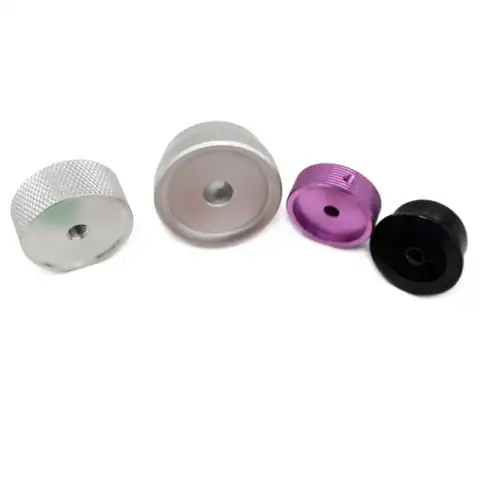
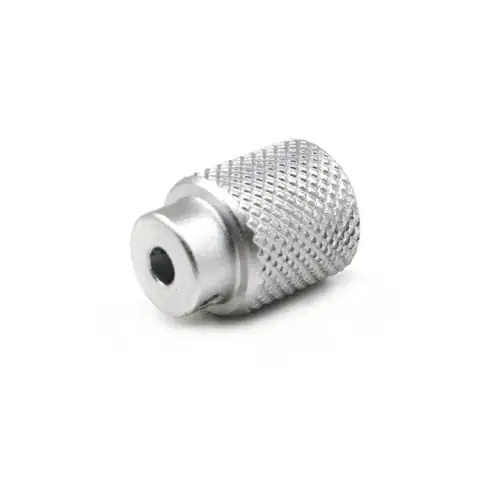
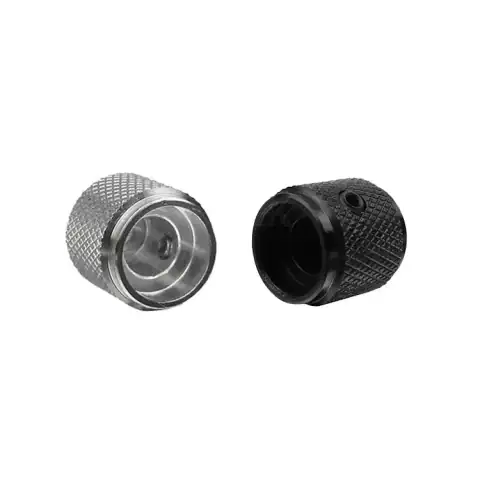
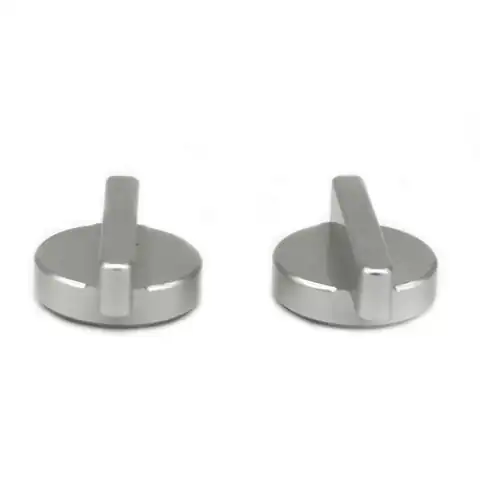
These are CNC turned anodized aluminum knobs and coupling nuts for electronic connectors, antenna adapters, encoders and test leads. They feature knurled grips, fine internal threads or press-fit bores and custom anodized colors for identification. They are made for electronics makers who need light, easy-to-grip metal knobs for connecting and adjusting devices.
- Material
- Aluminum
- Tolerance
- to ±0.005 mm
- MOQ
- 1 piece
- Prototype lead time
- 3–7 days
- Fine internal threads checked after anodizing
- Knurled grips for fingers or gloves
- Color coding by function
- Hard anodize for frequently mated threads
Item ref. 1601664448609 ·
| Process | CNC turning, Swiss-type style turning, knurling, tapping |
|---|---|
| Materials | Aluminum 6061; brass |
| Tolerance | ±0.05 mm standard; down to ±0.005 mm on critical features |
| Surface Finish | Type II color anodizing, Type III hard anodizing, nickel plating |
| Typical Parts | Coupling nuts, adapter knobs, encoder knobs |
| MOQ | 1 piece; prototypes through mid-volume |
| Drawing Formats | STEP, IGES, X_T, STL, DWG, DXF, PDF |
| Lead Time | Prototypes typically 3–7 working days; production 10–20 |
| Inspection | First-article, in-process and CMM checks; reports on request |
Manufacturing
How we make this part
Process, material options and inspection for anodized aluminum electronic connector knobs.
Connector knobs and coupling nuts are turned on CNC lathes, with internal threads cut or tapped to mate with connector bodies. Fine threads require careful tapping and thread-gauge checks, especially after anodizing, which adds a thin layer. Knurling gives a grip that works with fingers or gloves. Small parts may be produced on Swiss-style lathes for accuracy.
Aluminum 6061 keeps knobs light, reducing strain on connectors and panels. Color anodizing helps identify connectors by function, such as red for power or blue for signal. Hard anodizing improves thread wear resistance for frequently connected parts. Brass versions are used where conductivity or extra durability is needed, typically with nickel plating.
Threads are checked with gauges after anodizing, knurl quality is inspected, and color is matched to approved samples. Critical dimensions are checked on every batch, and parts are packed separated so anodized surfaces do not rub. Typical uses include RF connector coupling nuts, antenna adapters, test probe knobs, encoder knobs, sensor connectors and panel-mount connector caps.
FAQ
Frequently asked questions
Does anodizing affect fine threads?
Yes, slightly. Anodizing adds a thin layer to thread surfaces, which can make fine threads tight. We either cut threads with an allowance for the coating or mask threads during anodizing, then verify fit with gauges.
Why use aluminum instead of brass for connector knobs?
Aluminum is much lighter, reducing strain on connectors and panels, and offers easy color coding through anodizing. Brass is heavier but more wear resistant and conductive, so it suits connectors that are mated very often or need electrical continuity.
How do I get a quote for anodized aluminum electronic connector knobs?
Send a 3D model (STEP or IGES) and a 2D drawing with tolerances, material, finish and quantity through the quote form or by email. An engineer replies within 24 hours on business days with price, lead time and any DFM suggestions.
Request a quote
Quote this part
Attach drawings or send several parts at once from the full quote form.
- Emailinquiry@machined-parts-factory.com
- WhatsApp+86 176 2154 1688
- Phone+86 176 2154 1688
- HoursMon–Sat, 08:30–18:00 China Standard Time (UTC+8)