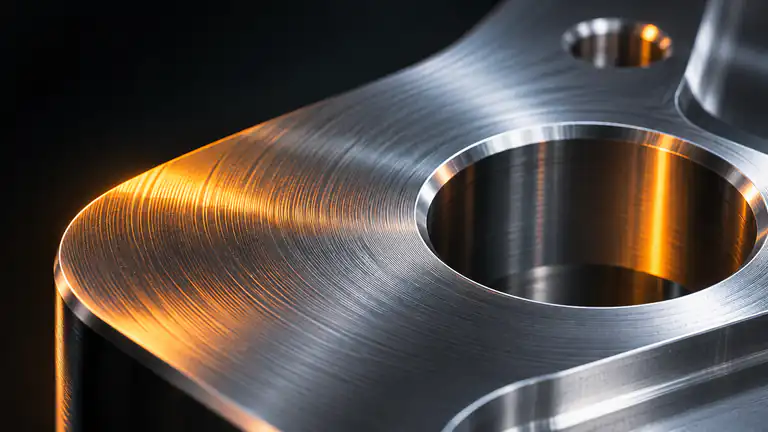
5-Axis CNC Machined 316 Stainless Steel Valve Body
This is a custom valve body or manifold machined on 5-axis CNC centers from 304 or 316 stainless steel. Intersecting ports, angled passages and sealing faces are cut in one or two setups, with critical bores held down to ±0.01 mm. It is built for fluid-control, process and marine equipment makers who need corrosion-resistant bodies without casting tooling.
- Material
- Stainless Steel
- Tolerance
- to ±0.005 mm
- MOQ
- 1 piece
- Prototype lead time
- 3–7 days
- Angled intersecting ports cut from one datum
- 316 for chlorides, 304 for water and air
- Passivated to restore corrosion resistance
- Borescope check of internal port intersections
Item ref. 62547338766 ·
| Process | 5-axis CNC milling, boring, reaming |
|---|---|
| Materials | Stainless steel 304, 316 (17-4PH on request) |
| Tolerance | ±0.05 mm standard; down to ±0.01 mm on bores and seats |
| Surface Finish | Passivation, polishing, bead blasting, powder coat (external only) |
| MOQ | 1 piece |
| Drawing Formats | STEP, IGES, X_T, STL, DWG, DXF, PDF |
| Lead Time | Prototypes ~3–7 working days; production typically 10–20 working days |
| Inspection | First-article + 100% critical-dimension inspection; CMM report on request |
| Certification | ISO 9001; material certificates on request |
Manufacturing
How we make this part
Process, material options and inspection for 5-axis cnc machined 316 stainless steel valve body.
Valve bodies start from bar or plate and are roughed while leaving stock for stress relief. 5-axis positioning drills angled ports so they intersect where the drawing says, rather than relying on separate fixtures that stack up error. Port bores and seats are finish-bored and, when needed, reamed. Internal intersections are deburred with back-chamfer tools and inspected with a borescope so no burr can break loose in service.
316 stainless contains molybdenum and resists chlorides, making it the standard for seawater, chemical and food-process valves; 304 is cheaper and fine for water and air. Both work-harden, so we keep tools sharp and feeds constant. Bodies are typically passivated to restore the chromium oxide layer after machining, then polished or bead-blasted. Powder coating is used only on external, non-sealing surfaces.
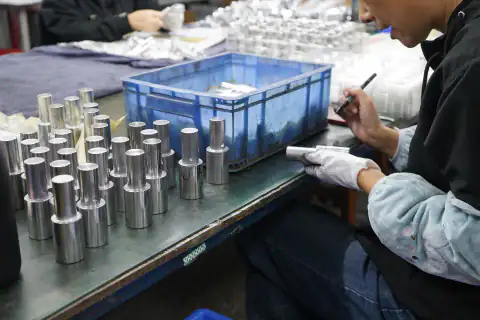
First articles get a CMM report on port positions and seat geometry, plus surface roughness checks on sealing faces. Threads are gauged and critical dimensions inspected on every unit. Material certificates for 304/316 are supplied on request, and pressure testing can be arranged to your procedure. Typical uses include ball and needle valve bodies, hydraulic manifolds, sampling blocks and marine fittings.
FAQ
Frequently asked questions
Why are stainless steel valve bodies passivated?
Machining can leave free iron and disturb the protective chromium oxide film on stainless steel. Passivation in a nitric or citric acid bath removes that iron and lets the oxide layer reform evenly, which restores corrosion resistance. It does not change dimensions or appearance noticeably.
Do you pressure test machined valve bodies?
We can arrange hydrostatic or air leak testing to your test pressure and procedure. Please specify the medium, pressure, hold time and acceptance criteria on the drawing or purchase order so the test is defined before production starts.
How do I get a quote for 5-axis cnc machined 316 stainless steel valve body?
Send a 3D model (STEP or IGES) and a 2D drawing with tolerances, material, finish and quantity through the quote form or by email. An engineer replies within 24 hours on business days with price, lead time and any DFM suggestions.
Request a quote
Quote this part
Attach drawings or send several parts at once from the full quote form.
- Emailinquiry@machined-parts-factory.com
- WhatsApp+86 176 2154 1688
- Phone+86 176 2154 1688
- HoursMon–Sat, 08:30–18:00 China Standard Time (UTC+8)