CNC Lathe Turned Brass and Copper Connector Pins
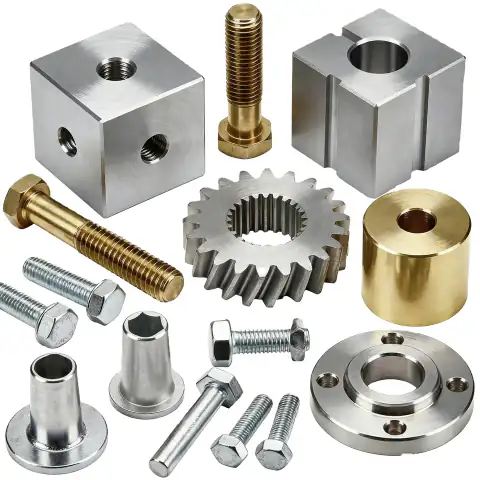
These are small turned pins, contacts, sockets and terminals made on CNC lathes from free-cutting brass or electrolytic copper. Diameters and shoulders are held down to ±0.01 mm, and parts can be nickel plated, painted or left bright. They are for electronics, battery and electrical-equipment makers needing conductive turned parts in prototype through mid-volume quantities.
- Material
- Brass
- Tolerance
- to ±0.005 mm
- MOQ
- 1 piece
- Prototype lead time
- 3–7 days
- Brass for cost, copper for high-current paths
- Diameters held down to ±0.01 mm
- Nickel plating, tin-ready or painted finishes
- Swiss-type style turning for small parts
Item ref. 1600390905674 ·
| Process | CNC turning, Swiss-type style turning of small parts |
|---|---|
| Materials | Brass C36000/H59/H62; copper |
| Tolerance | ±0.05 mm standard; down to ±0.01 mm on pin diameters |
| Surface Finish | Bright, nickel plating, painting |
| MOQ | 1 piece |
| Drawing Formats | STEP, IGES, X_T, STL, DWG, DXF, PDF |
| Lead Time | Prototypes ~3–7 working days; production typically 10–20 working days |
| Inspection | First-article + 100% critical-dimension inspection; CMM report on request |
| Typical Parts | Pins, contacts, sockets, terminals, studs |
Manufacturing
How we make this part
Process, material options and inspection for cnc lathe turned brass and copper connector pins.
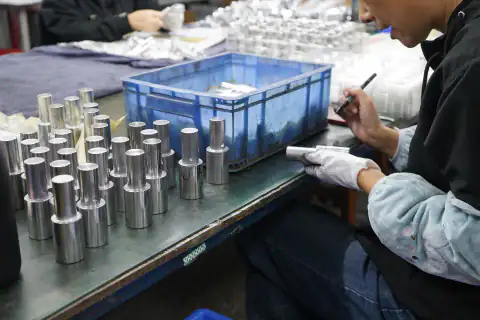
Small pins are turned from drawn bar on CNC lathes with bar feeders, while very fine parts are run in the Swiss-type style with a guide bushing that supports the stock close to the tool. Cross holes, slots and crimp barrels are added with live tooling. Brass chips break cleanly, which allows high speeds and consistent finishes; copper is gummier, so we use sharper tools and lower feeds to avoid burrs.
Brass C36000/H59 is the economical choice: easy to machine, good conductivity and suitable for plating. Pure copper conducts roughly three times better than brass and is used for high-current contacts, but it machines slowly and tarnishes, so nickel or tin plating is common. Brass parts can be painted for color coding. Plating thickness, typically a few microns, is accounted for on mating diameters.
Pin diameters are checked with micrometers and pin gauges, lengths on height gauges, and cross-hole positions on an optical or CMM setup at first article. Critical dimensions are inspected on every part, and plating is checked for adhesion and coverage. Typical uses include PCB pins, battery terminals, socket contacts, grounding studs and sensor connectors.
FAQ
Frequently asked questions
Should I use brass or copper for electrical contacts?
Use copper when current density is high and heat from resistance matters, such as battery busbar terminals. Use brass for signal pins, sockets and general connectors: it machines much faster, costs less and has adequate conductivity, especially when nickel plated for corrosion protection.
How small can you turn brass pins?
We regularly turn brass pins with diameters of around 1 mm and above, using Swiss-type style guide-bushing support for slender parts. Smaller diameters are possible depending on length-to-diameter ratio. Send the drawing and we will confirm feasibility and tolerance before quoting.
How do I get a quote for cnc lathe turned brass and copper connector pins?
Send a 3D model (STEP or IGES) and a 2D drawing with tolerances, material, finish and quantity through the quote form or by email. An engineer replies within 24 hours on business days with price, lead time and any DFM suggestions.
Request a quote
Quote this part
Attach drawings or send several parts at once from the full quote form.
- Emailinquiry@machined-parts-factory.com
- WhatsApp+86 176 2154 1688
- Phone+86 176 2154 1688
- HoursMon–Sat, 08:30–18:00 China Standard Time (UTC+8)