CNC Milled and Drilled 304 Stainless Steel Parts
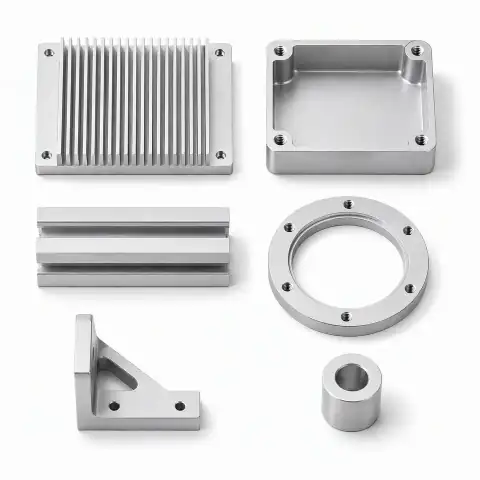
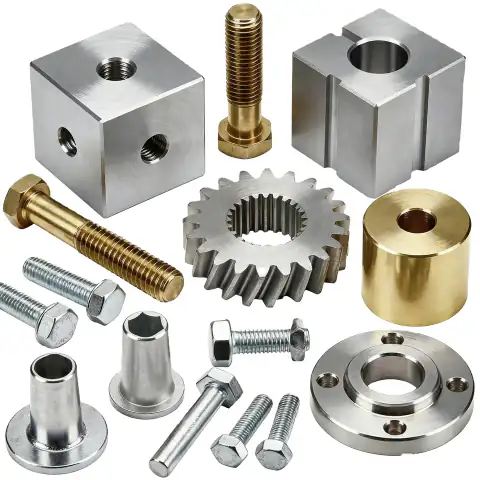
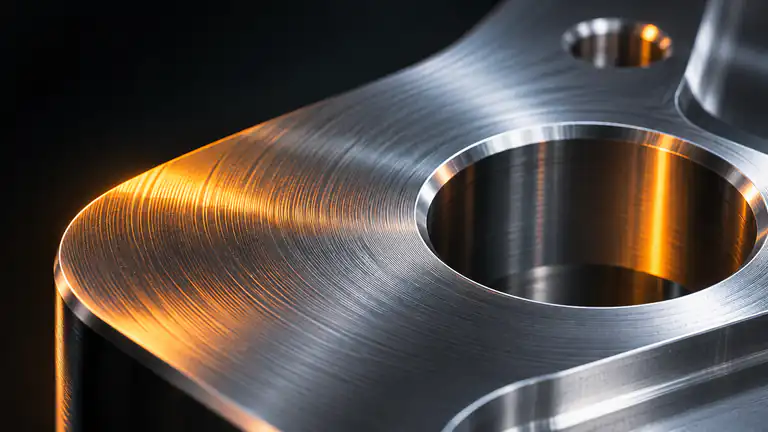
These are custom stainless steel parts produced by CNC milling, drilling and turning, including mounting plates, manifold blocks, flanges, spacers and hinges. We machine them mainly from 304 and 316 stainless steel, then passivate or bead blast. They are made for equipment builders in food, medical, marine and general industry that need corrosion-resistant machined parts.
- Material
- Stainless Steel
- Tolerance
- to ±0.005 mm
- MOQ
- 1 piece
- Prototype lead time
- 3–7 days
- Steady feed rates to avoid work hardening
- Peck or gun drilling for deep manifold holes
- 304, 316 and 303 stainless grades
- Bead blasted, brushed or polished, then passivated
Item ref. 1600077813418 ·
| Process | CNC milling, drilling, CNC turning |
|---|---|
| Materials | Stainless steel 303, 304, 316 |
| Tolerance | ±0.05 mm standard; down to ±0.005 mm on critical features |
| Surface Finish | Bead blasting, brushing, polishing, passivation |
| Typical Parts | Plates, manifold blocks, flanges, hinges |
| MOQ | 1 piece; prototypes through mid-volume |
| Drawing Formats | STEP, IGES, X_T, STL, DWG, DXF, PDF |
| Lead Time | Prototypes typically 3–7 working days; production 10–20 |
| Inspection | First-article, in-process and CMM checks; reports on request |
Manufacturing
How we make this part
Process, material options and inspection for cnc milled and drilled 304 stainless steel parts.
Stainless steel needs slower cutting speeds and rigid setups than aluminum. We use coated carbide tools, flood coolant and steady feed rates so the tool never rubs, since rubbing work-hardens 304 and makes the next pass harder. Deep holes in manifolds are peck drilled or gun drilled with through-tool coolant to clear chips and keep holes straight.
304 is the general workhorse grade. 316 adds molybdenum and is chosen for salt water, chlorides and many chemicals. 303 machines more easily but trades away some corrosion resistance and weldability. Finishes include bead blasting for a uniform satin look, brushing for a directional grain, polishing for hygienic surfaces and passivation to maximize corrosion resistance.
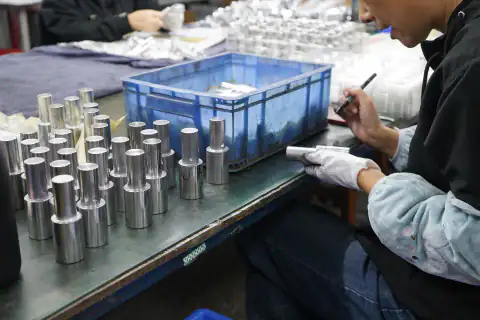
Hole positions and flatness are measured on a CMM, threads are checked with gauges, and surface roughness can be measured on sealing or hygienic faces. Critical dimensions are verified on every part. Typical uses include food machine mounting plates, hydraulic manifolds, pipe flanges, pump brackets, marine hinges and laboratory equipment frames.
FAQ
Frequently asked questions
Is 304 or 316 stainless better for machined parts?
304 is stronger value for general use and slightly easier to machine. 316 is the better choice where parts contact salt water, chlorides or aggressive cleaning chemicals, thanks to its molybdenum content. If unsure, describe the environment and we will recommend a grade.
Why is passivation recommended after machining stainless?
Machining can leave tiny iron particles from tools and fixtures on the surface, which may rust and look like the part is corroding. Passivation removes them chemically and helps the chromium oxide film reform, restoring full corrosion resistance.
How do I get a quote for cnc milled and drilled 304 stainless steel parts?
Send a 3D model (STEP or IGES) and a 2D drawing with tolerances, material, finish and quantity through the quote form or by email. An engineer replies within 24 hours on business days with price, lead time and any DFM suggestions.
Request a quote
Quote this part
Attach drawings or send several parts at once from the full quote form.
- Emailinquiry@machined-parts-factory.com
- WhatsApp+86 176 2154 1688
- Phone+86 176 2154 1688
- HoursMon–Sat, 08:30–18:00 China Standard Time (UTC+8)