CNC Turned Brass, Aluminum and Stainless Steel Fittings
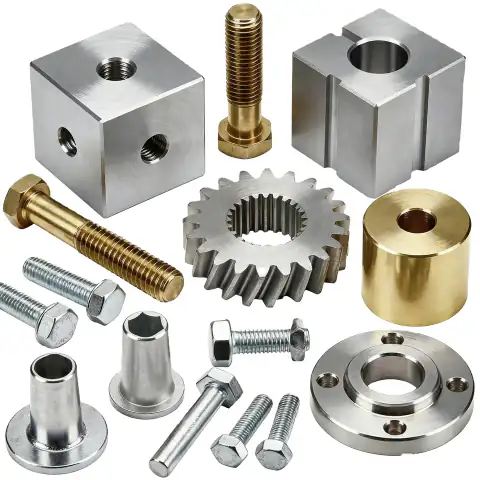
These are custom turned fittings, adapters, nipples and threaded connectors machined on CNC lathes from brass C36000, 6061 aluminum or 304/316 stainless steel. Threads, sealing faces and hex flats are produced to your drawing, with diameters held down to ±0.01 mm. They are for equipment makers who need non-catalog fluid, gas or mechanical connections in small or mid volumes.
- Material
- Brass
- Tolerance
- to ±0.005 mm
- MOQ
- 1 piece
- Prototype lead time
- 3–7 days
- NPT, BSP, metric and UNF threads to drawing
- Brass, 6061 aluminum, 304 and 316 stainless
- Hex-bar stock for integrated wrench flats
- Thread gauges checked on every critical callout
Item ref. 1600230751129 ·
| Process | CNC turning with live-tool cross drilling |
|---|---|
| Materials | Brass C36000/H59; aluminum 6061-T6; stainless steel 304/316 |
| Tolerance | ±0.05 mm standard; down to ±0.01 mm on sealing diameters |
| Surface Finish | Nickel plating, anodizing, passivation, polishing |
| MOQ | 1 piece |
| Drawing Formats | STEP, IGES, X_T, STL, DWG, DXF, PDF |
| Lead Time | Prototypes ~3–7 working days; production typically 10–20 working days |
| Inspection | First-article + 100% critical-dimension inspection; CMM report on request |
| Thread Types | NPT, BSP/G, metric, UNF/UNC per drawing |
Manufacturing
How we make this part
Process, material options and inspection for cnc turned brass, aluminum and stainless steel fittings.
Fittings are turned from round or hex bar on CNC lathes; hex stock removes a milling step for wrench flats. Internal ports are drilled and bored, then threads are single-point cut or tapped depending on size and tolerance class. Sealing faces and O-ring grooves are finished with a light final pass to reach a smooth surface. Cross-drilled ports and side outlets are milled with live tooling in the same setup.
Free-cutting brass is the fastest material to machine and naturally resists water and air corrosion, making it a common choice for plumbing and pneumatics. Aluminum is lighter and cheaper but needs anodizing for durability and is less suited to high-pressure threads. Stainless 316 handles chemicals and marine environments; it costs more to cut. Finishes include nickel plating on brass, anodizing on aluminum, and passivation or polishing on stainless.
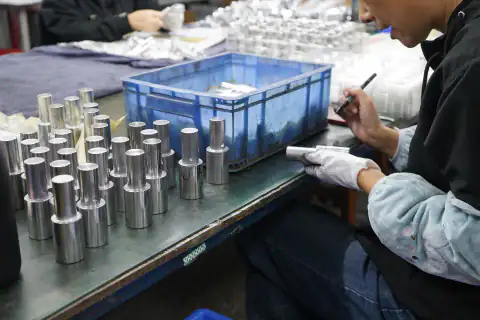
Threads are checked with go/no-go plug and ring gauges, sealing faces for surface roughness with a profilometer, and port positions on CMM at first article. Critical dimensions are inspected on every part before shipping, and material certificates are available on request. Typical applications are pneumatic adapters, hydraulic test ports, gas regulator bodies, coolant nozzles and instrument connections.
FAQ
Frequently asked questions
Which thread standards can you machine on fittings?
We machine NPT, BSPP/BSPT, metric fine and coarse, UNF and UNC threads, internal or external, as specified on your drawing. Each thread is verified with matching go/no-go plug or ring gauges. If your drawing lists a tolerance class such as 6H or 2A, we gauge to that class.
Is brass or stainless better for a pressurized fitting?
For water, air and most oils at moderate pressure, brass is cost-effective and seals well. For chemicals, seawater, food contact or higher temperatures, 316 stainless is the safer choice. Tell us the medium, pressure and temperature, and we will suggest a grade and wall thickness for review.
How do I get a quote for cnc turned brass, aluminum and stainless steel fittings?
Send a 3D model (STEP or IGES) and a 2D drawing with tolerances, material, finish and quantity through the quote form or by email. An engineer replies within 24 hours on business days with price, lead time and any DFM suggestions.
Request a quote
Quote this part
Attach drawings or send several parts at once from the full quote form.
- Emailinquiry@machined-parts-factory.com
- WhatsApp+86 176 2154 1688
- Phone+86 176 2154 1688
- HoursMon–Sat, 08:30–18:00 China Standard Time (UTC+8)