3-Axis vs 4-Axis vs 5-Axis CNC: When Does 5-Axis Pay Off?
More axes mean fewer setups and access to more angles, but also a higher hourly rate. This guide explains what each machine type does and when 5-axis machining actually lowers the cost of a part.
By the Axisform engineering teamPublished 7 min read
3-axis CNC milling moves the tool along X, Y and Z and suits flat or prismatic parts machined from one or two sides. 4-axis adds a rotary axis, usually around X, so features around a cylinder or on four sides can be cut in one setup. 5-axis adds two rotary axes, so the tool can reach almost any face and angle; it pays off when a part would otherwise need many setups, when features on different faces must be accurately positioned relative to each other, or when the geometry is a free-form or undercut shape that a 3-axis machine cannot reach.
What do the axes on a CNC machine mean?
A CNC milling machine moves a rotating cutter relative to a workpiece. Each independently controlled motion is an axis:
X, Y, Z — the three linear axes: left–right, front–back and up–down.
A — rotation around the X axis.
B — rotation around the Y axis.
C — rotation around the Z axis.
A 4-axis machine has X, Y, Z plus one rotary axis (usually A). A 5-axis machine has X, Y, Z plus two rotary axes, commonly A and C on a trunnion table, or B and C, or a tilting head.
How does 3-axis CNC machining work and when is it enough?
On a 3-axis mill the tool always points straight down the Z axis. Any face the tool needs to reach must face upward, so the part is unclamped, flipped and re-clamped for each side. Each new setup is called an operation or "op."
3-axis is the right choice for:
Plates, flanges, covers and brackets with features on one or two faces.
Pockets, slots, holes and contours that are all perpendicular to one face.
Simple 2.5D parts (profiles plus pockets at different depths).
Larger parts that fit the bigger travel of 3-axis machines.
It is the cheapest option per machine hour, setup and programming are straightforward, and most machined parts in the world are still made on 3-axis machines.
What are the limits of 3-axis machining?
Every extra side is an extra setup. Each setup adds handling time and a new fixture or vise position.
Setup-to-setup error. Each re-clamp introduces a small location error. Features cut in different setups are positioned relative to each other less accurately than features cut in the same setup.
No undercuts without special tools such as T-slot or dovetail cutters.
Free-form surfaces need small ball-end tools stepping over many passes, leaving scallops and long cycle times.
What does a 4-axis CNC add?
The fourth axis is a rotary table or indexer, usually mounted so the part rotates around the X axis. Two modes exist:
Indexed 4-axis: the part rotates to an angle, locks, and the machine cuts as a 3-axis machine. This is ideal for features on four sides of a block or around a shaft.
Continuous (simultaneous) 4-axis: the rotary axis moves while cutting, so the machine can cut helical grooves, cams, wrapped engravings and spiral features.
4-axis suits:
Parts with holes or pockets on several sides around a common axis.
Shafts with cross holes, flats and keyways (often also done on a turn-mill lathe).
Cam profiles and helical slots.
Several small parts on a tombstone fixture, rotated to present each face.
What does 5-axis CNC machining add?
With two rotary axes, the tool can be oriented at almost any angle to the part. There are two main ways to use it:
What is 3+2 machining?
Also called positional 5-axis, 3+2 machining tilts and rotates the part to a fixed orientation, then machines it with three linear axes. It is used for parts with features on many faces or at compound angles. The benefit is fewer setups and shorter, more rigid tools, because the tool can approach the feature directly instead of reaching over the part.
What is simultaneous 5-axis machining?
All five axes move together during the cut. This is needed for free-form surfaces such as impellers, turbine blades, propellers, ergonomic housings, orthopedic shapes and complex mold cores. The tool stays at the optimal angle to the surface, so the side of a cutter can be used instead of the tip, giving better surface finish and shorter cycle times.
3-axis vs 4-axis vs 5-axis: comparison table
Factor
3-axis
4-axis
5-axis
Axes
X, Y, Z
X, Y, Z + one rotary
X, Y, Z + two rotary
Typical parts
Plates, brackets, covers, pockets
Shafts with cross features, multi-side blocks, cams
5-axis costs more per machine hour, so it pays off only when it removes enough other cost or makes a part possible. It usually makes economic sense when:
A part needs four or more setups on a 3-axis machine. Each setup removed saves handling, fixture time and inspection after the setup.
Features on different faces have tight positional relationships. If a bore on the side must be positioned to a bore on the top within a few hundredths of a millimeter, cutting both in one setup avoids re-clamping error. This is often the strongest technical argument for 5-axis.
Compound angles. Holes or faces at angles in two planes are simple on 5-axis but require angle plates or custom fixtures on 3-axis.
Deep features near walls. Tilting the tool lets you use a shorter, stiffer cutter, improving accuracy and finish.
Free-form or sculpted surfaces. Simultaneous 5-axis gives better finish in less time than 3-axis ball-end stepping.
Low-volume, complex parts. For prototypes and small batches, avoiding dedicated fixtures for each setup can outweigh the higher hourly rate.
When is 5-axis not worth it?
Flat parts, plates and simple prismatic parts with one or two working faces.
Large, heavy parts that exceed the travel or table load of a 5-axis machine.
High-volume simple parts where a dedicated fixture on a 3-axis or 4-axis machine with a pallet system is cheaper per piece.
Parts that are basically turned shapes; a lathe or turn-mill center is usually more efficient.
How should designers think about axis count?
You do not need to specify the machine on the drawing — the supplier chooses the process. But design decisions influence which machine is needed:
Put features on as few faces as practical. Holes from one or two sides keep a part on 3-axis.
Avoid compound angles unless they are functional. A hole tilted in one plane is far simpler than one tilted in two.
Dimension features from common datums. This makes the inspection plan match the machining strategy.
Accept rounded transitions where possible, rather than sharp internal corners at angles that only an EDM process can produce.
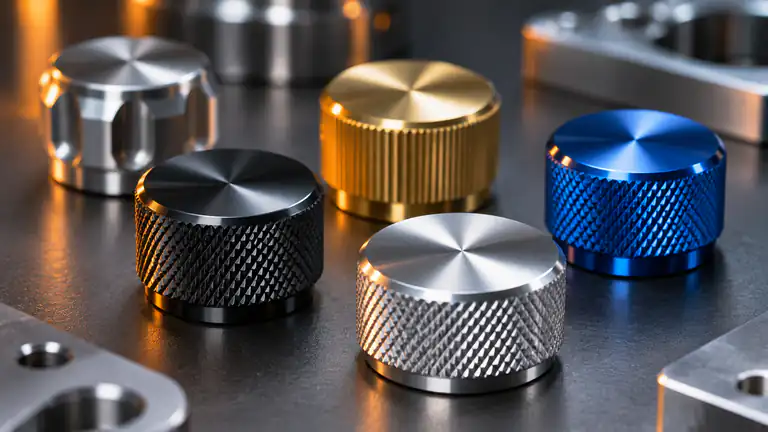
For round parts, the comparison is not only between milling machines. Turn-mill centers combine turning with live tooling and a C axis (and sometimes a Y or B axis), so a shaft or knob can be turned, cross-drilled, flatted and milled in one setup. Swiss-type style lathes are efficient for small, slender turned parts. If your part is mostly round, ask whether turning is the better route — see our guide to machining custom metal knobs for an example.
How Axisform chooses the process
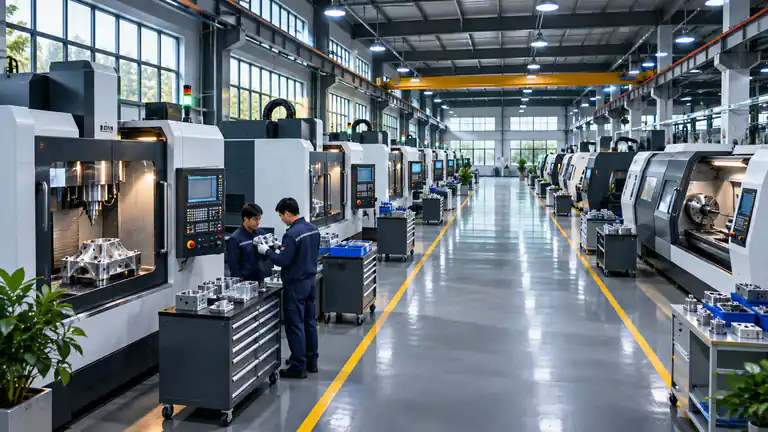
Axisform runs 3-, 4- and 5-axis CNC milling alongside CNC turning, turn-mill, wire EDM and broaching. For each RFQ, the machining route is chosen by geometry, tolerance and quantity rather than by default, and the quote reflects that route. You can see examples on our projects page or send a STEP file and drawing through contact.
Frequently asked questions
Is 5-axis machining more accurate than 3-axis?
A 5-axis machine is not inherently more accurate on a single feature, but it can cut features on several faces in one setup. That avoids re-clamping error, so positional accuracy between faces is usually better on complex parts.
Is 5-axis machining more expensive?
The hourly rate is higher, but the part price is not always higher. When a part would need many setups or special fixtures on a 3-axis machine, 5-axis can be equal or cheaper overall. For simple flat parts, 3-axis remains cheaper.
What is the difference between 3+2 and full 5-axis?
In 3+2 machining the rotary axes position the part at a fixed angle, then the machine cuts with three linear axes. In full or simultaneous 5-axis, all five axes move together during the cut, which is required for free-form surfaces like impellers and blades.
Do I need to specify 5-axis on my drawing?
No. Specify geometry, tolerances and datums, and let the supplier choose the process. Mention it only if a specific surface finish or tool path requirement makes a particular method necessary.
Written by the Axisform engineering team
Manufacturing and quality engineers at our Dongguan machining factory. Questions about this guide? Email us.
Need parts made to these principles?
Send your drawing and an engineer will reply with DFM notes and a quote within 24 hours.
A good metal knob depends as much on its bore fit and runout as on its finish. This guide covers knurling patterns, materials, finishes and the main ways knobs attach to shafts in audio, appliance and automotive controls.
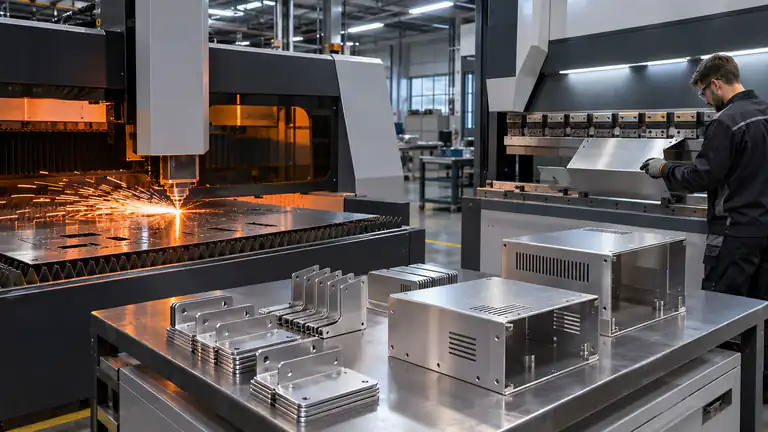
Sheet metal is usually cheaper for uniform-wall enclosures and brackets, while CNC machining wins on varying thickness and tight tolerances. This guide compares both and explains bend radius and K-factor basics.
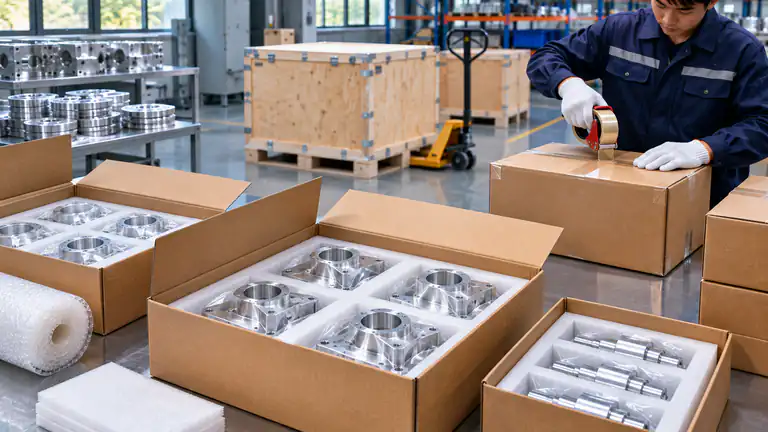
Most quality problems with imported machined parts come from requirements that were never written down. This guide walks through the RFQ package, first article approval, inspection documents, Incoterms and shipping.